Physical Address
304 North Cardinal St.
Dorchester Center, MA 02124
Physical Address
304 North Cardinal St.
Dorchester Center, MA 02124

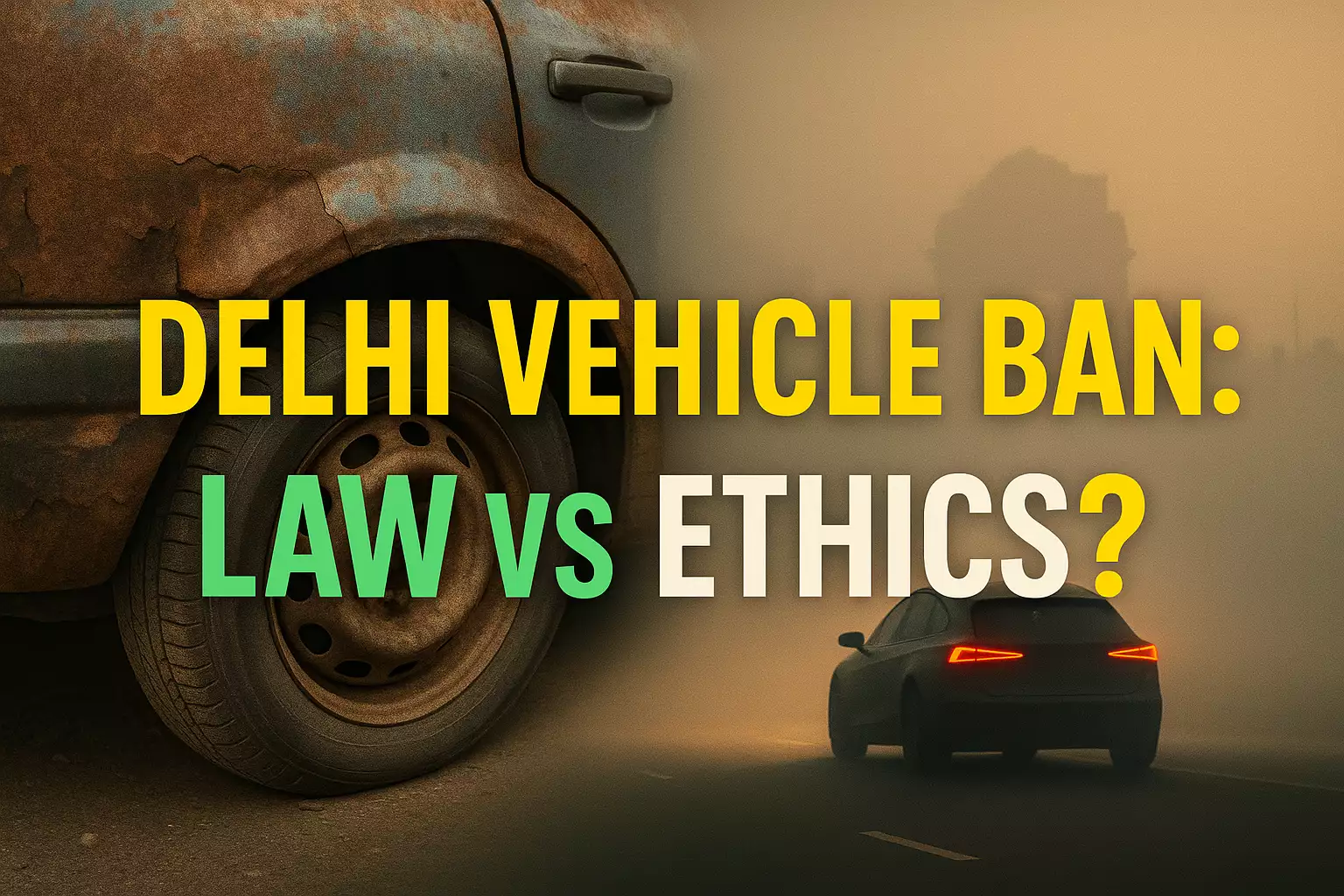
The Delhi Vehicle Ban has become one of India’s most debated environmental policies. Despite owners upgrading engines, catalytic converters, and pollution systems, many vehicles are still banned in the capital once they cross the 10-year diesel or 15-year petrol limit.
So why does this happen — and is it truly fair?
Let’s understand both the legal and ethical sides of the Delhi Vehicle Ban.
Odisha Launches ‘Ama Sathi’ WhatsApp Number for 120+ Citizen Services
The Delhi Vehicle Ban is enforced under orders from the National Green Tribunal (NGT) and upheld by the Supreme Court of India.
According to these orders:
The rule applies regardless of whether the vehicle passes pollution or fitness tests.
👉 It’s an age-based ban, not performance-based.
External Reference:
Read the official NGT Order on Delhi Vehicle Ban for legal details.
Delhi has among the worst air quality in the world, with PM2.5 and NOx levels exceeding safe limits.
Studies by the CPCB (Central Pollution Control Board) show that older vehicles emit up to 10–12 times more pollutants than modern BS-VI vehicles.
Therefore, the ban’s goal is to:
While the goal is environmental, the method is controversial.
Legally, the ban is clear.
But ethically, many argue it’s unfair — especially to responsible owners who’ve invested in upgrades.
For example:
Yet, your car is banned simply because of its age — not its emissions.
This creates a moral dilemma:
Should a vehicle that’s technically clean be treated as “polluting” just because it’s old?
That’s the ethical flaw in the Delhi Vehicle Ban system.
The Delhi Government often gets blamed, but it’s bound by Supreme Court orders.
The NGT decision left no scope for exceptions —
even for vehicles upgraded with cleaner technology.
Also, vehicle registration in India is tied to the chassis number, not the engine.
So changing your engine doesn’t reset the vehicle’s age.
Reference: Supreme Court Judgement 2018 on Diesel Vehicle Ban
While you can’t legally drive a banned vehicle in Delhi NCR, you can:
✅ Re-register it in another state (like Haryana, Rajasthan, or Odisha)
✅ Obtain a new fitness certificate from that state’s RTO
✅ Continue using it legally outside the NCR zone
Many Delhi owners have successfully done this — it’s the only practical workaround.
Experts suggest India should move from age-based bans to emission-based rules.
That means:
This would make the Delhi Vehicle Ban more fair and future-ready.
The Delhi Vehicle Ban may be legal — but ethically, it punishes the wrong people.
Instead of judging vehicles by their age, India must judge them by their actual emissions.
🚗 Law protects the air. Ethics protects fairness.
It’s time to make both work together.
The Delhi Vehicle Ban prohibits diesel vehicles over 10 years and petrol vehicles over 15 years from operating in Delhi NCR, as per NGT and Supreme Court orders.
It aims to reduce Delhi’s severe air pollution caused by older, high-emission vehicles and promote cleaner, BS-VI compliant transport.
No. Even with a new BS-VI engine, vehicles older than the allowed age can’t be driven in Delhi NCR — the rule is strictly age-based.
Yes. You can re-register your vehicle in another state after passing a fitness test and continue using it legally outside Delhi.
Legally yes, but ethically debated — it reduces pollution but penalizes responsible owners who maintain or upgrade their vehicles.